
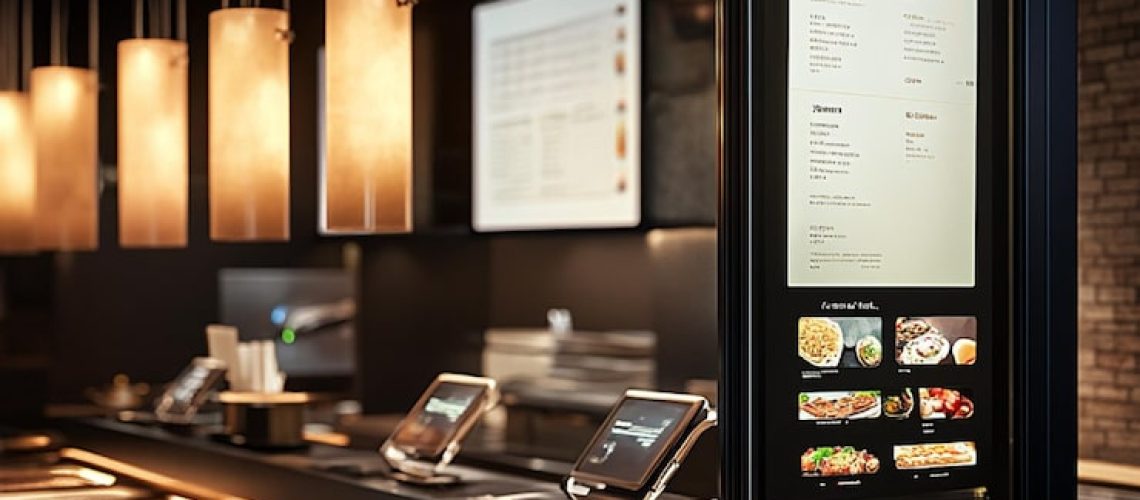
A practical look at how digital menu innovations are reshaping restaurant experiences and revenue strategies in 2026.
The restaurant industry is changing faster than ever before, and technology is reshaping customer expectations. One of the biggest changes is the rapid adoption of digital menu boards. What started as a replacement for printed menu panels has now become a strategic tool for branding, upselling, and operational efficiency.
In 2026, digital menus for restaurants are not merely a tool for display – they are a data-powered communication platform. From personalisation and automation to seamless system integrations, modern restaurant digital menu boards are affecting how your customers order, how your kitchens operate, and how your businesses grow.
Let’s look at the most important trends shaping this shift.
The Shift Toward Data-Driven Digital Menu Boards
One of the most important trends in 2026 will be the emergence of data-driven digital menu boards. Restaurants are increasingly using their menu systems alongside their POS and analytics tools to make smarter decisions on product placement and promotions.
Rather than displaying items at random, digital menus can be used to bring up high-margin dishes during peak hours or to push combo offers when footfall is higher. Sales trends, time-based demand, and even seasonal preferences can be used to decide what’s most prominent on screen.
This strategic application of data turns a simple digital menu board for restaurants into a revenue optimisation engine. Restaurants can try out different layouts, see how things work, and make changes on the fly, something impossible with static printed menus.
Personalisation and Context-Based Content
In 2026, personalisation is no longer an option. Consumers are demanding customised experiences, and digital displays are making that possible. Many brands are now using context triggers to adapt content dynamically.
For example:
- Breakfast items are automatically displayed in the morning hours
- Seasonal drinks are emphasized during festive or summertime
This contextual adaptability makes the content more relevant, leading to higher conversion rates. Advanced systems even enable loyalty integrations, meaning repeat customers may find recommendations based on their prior purchases when accessing connected restaurant digital menus.
Such smart adaptation ensures menus remain fresh and interesting while reinforcing brand identity.
Visually Immersive and Dynamic Displays
Visual storytelling has become a powerful tool in the modern dining environment. In 2026, digital menu boards are set up with high-resolution imagery, movement graphics, and subtle animation that stimulate appetite and attention.
An engaging digital menu board for restaurants does more than list prices; it creates anticipation. Short looping videos of food, dynamic transitions, and rich colour contrasts draw customer attention to promotional items and featured dishes.
Restaurants are also experimenting with minimalistic layouts, which will make sense. Clean typography, good visual hierarchy, and organised categories are a great way to make things more readable, especially in places with little time to read, such as a fast-food place where people are making decisions in seconds.
Touchless and Hybrid Ordering Experiences
Customer convenience is still a factor in digital menu design. Touchless technology is a major trend, augmented by QR codes that provide a complementary physical screen.
Many restaurants are now introducing wall-mounted digital menu boards and mobile access menus. Guests can scan a code to access the same dynamic content on their smartphones. This hybrid approach combines large-format visibility with personal convenience.
On top of that, self-ordering kiosks integrated with digital menu systems will help reduce the waiting times and improve order accuracy. The integration between display screens and backend systems ensures consistent, real-time pricing and availability updates.
Seamless Integration with Backend Systems
Another defining trend is system integration. In 2026, there will no longer be a standalone digital menu unit for restaurants. They are linked to POS systems, inventory systems, loyalty systems, and delivery apps.
By centralising content management, businesses avoid inconsistencies and minimise human mistakes. This operational efficiency is a significant benefit to the overall workflow while maintaining brand consistency.
Cost Efficiency and Sustainability
Sustainability has become a big issue in the hospitality world. Printed menu replacements create waste and recurring printing costs. In contrast, digital alternatives are a more environmentally responsible solution.
While the cost of initial setup for digital menu boards may be higher than the cost of the system itself, the long-term savings are notable. Restaurants no longer must print and update their menus’ panels for every minor change. Updates occur digitally, cutting material waste and labour costs.
Additionally, energy-efficient LED technology has ensured that modern restaurant digital menu boards are more sustainable than those of past generations. Lower power consumption and long-lasting components guarantee durability and lower maintenance costs.
Strategic Menu Engineering
Menu engineering has been a growing trend in recent years, and digital displays are accelerating this practice. With data-driven digital menu boards, restaurants can quickly test pricing strategies and placement variations.
For instance, when a profitable dish is moved to a higher section of the screen during peak hours, the order pattern can be affected. Promotions can be scheduled to occur at certain times to maximise conversions.
Because digital systems enable continuous optimisation, restaurants can refine strategies based on performance metrics rather than assumptions. This experiment, backed by data, enhances profitability and gives a competitive advantage.
Design Simplicity and Brand Alignment
While the technology is improving, design clarity is essential. In 2026, successful digital menu board for restaurants solutions find the balance between creativity and simplicity.
Menus should also be easy to read from a distance. Overloading screens with animation or too much text can detract from effectiveness. Instead, brands are emphasising:
- Clear categorization of the segmentation
- Balanced colour schemes were consistent with brand identity
- Minimal but Impactful Elements of Motion
When done correctly, digital menus enhance the dining experience without overwhelming customers.
Preparing for the Digital-First Future
The changing nature of menu displays is part of a wider digitalisation of the hospitality industry. Customers are increasingly demanding fast, intuitive, and attractive experiences. Digital menus for restaurants satisfy these expectations while giving restaurants greater control over messaging and pricing.
Forward-thinking restaurants are investing in scalable restaurant systems that enable easy upgrades and expansion. As customer behaviour continues to evolve, agile menu infrastructure ensures brands remain relevant.
Looking Ahead: Smart Menus as Growth Drivers
The future of dining is interactive, responsive, and data driven. Restaurant digital menu boards are right at the heart of this evolution. By combining analytics, automation, and design innovation, they can help restaurants better engage their customers and improve the performance of their operations.
In 2026 and beyond, menus aren’t static information panels; they’re dynamic brand ambassadors. Restaurants that embrace the potential of data-driven digital menu boards will be better equipped to optimise sales, personalise experiences, and streamline operations.
At Bitsy Displays, we understand that digital menu boards are more than just display tools—they are powerful business assets. With years of experience in digital display technology and strong industry expertise, we help restaurants implement reliable and scalable digital menu board for restaurants solutions. Our advanced systems support data-driven digital menu boards, enabling brands to enhance engagement, improve operational efficiency, and stay competitive in a rapidly evolving market.